U.S. Global Health Legislation Tracker
This tracker provides a listing of global health-related legislation introduced in the current Congress.






This tracker provides a listing of global health-related legislation introduced in the current Congress.
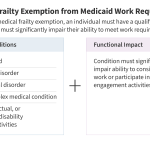
This brief describes new guidance and potential challenges states will face in operationalizing the medical frailty exemption.
In this episode, Dr. Ziad Obermeyer joins Chip to talk about AI bias in patient management, including how far the health care industry has come since his groundbreaking research that revealed alarming biases in a widely used algorithm that underestimated the health needs of Black patients.
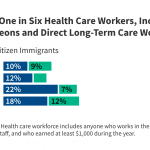
This issue brief provides data on immigrants’ role in the U.S. health care workforce, including within key industries such as direct long-term care and the hospital workforce.
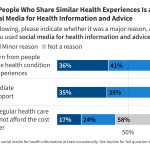
This poll finds that about 3 in 10 adults turn to social media for health information and advice at least monthly. Community connection and the need for immediate answers are the top reasons why people are turning to these tools. Slim majorities of those who use social media for health are confident they can tell…
In this analysis, published in the journal Contraception, KFF’s Linda Li, Brittni Frederiksen, and Alina Salganicoff look at intrauterine device (IUD) and contraceptive implant insertion-related costs among privately insured individuals to better understand why patients are experiencing unexpected expenses for what should be fully covered contraceptive services under the ACA.
Authored by KFF’s Alina Salganicoff, Ivette Gomez, and Usha Ranji, this article for The Milbank Quarterly examines how state policies create varying levels of access to reproductive healthcare services.
This brief summarizes recent and proposed actions by states related to access to state-funded health coverage and other services for immigrants and immigration enforcement activity during the 2025 and 2026 state legislative sessions.

How can AI determine who gets matched to new therapies, who is identified for clinical trials, and how patient tracking is scaled across large populations? Chip is joined by Dr. A.J. Blood, a practicing cardiologist at Brigham and Women’s Hospital and the co-founder and Chief Executive Officer of AIwithCare, a startup company that delivers AI-enabled…
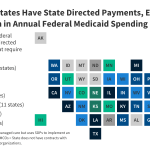
Forty states and DC currently receive $93 billion in annual federal Medicaid spending through state directed payments (SDPs) and may be at risk due to forthcoming limits on these payments, according to new KFF estimates. Annual federal spending on SDPs is highest in California (an estimated $10.6 billion)—followed by Texas ($6.3 billion), North Carolina ($5.2…