
The U.S. Government and Global Health
This fact sheet provides an overview of U.S. government global health policy and engagement.






This fact sheet provides an overview of U.S. government global health policy and engagement.
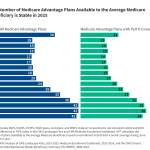
A review of the 2025 Medicare Advantage plans available for individual enrollment shows that the total number of plans declined by 7% (from 3,959 to 3,699). The average Medicare beneficiary will have the option of 34 Medicare Advantage prescription drug (MA-PD) plans in 2025, just 2 fewer than the 36 options available in 2024. Since…
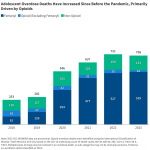
This brief analyzes the latest CDC data on adolescent overdose deaths, finding that from 2022 to 2023, there was a small reduction in overdose fatalities among adolescents (from 721 to 708 deaths). Additionally, the synthetic opioid, fentanyl, has largely driven the increase in adolescent drug fatalities since the pandemic began, accounting for 76% of these…
In the U.S., Hispanic/Latino people have been disproportionately affected by HIV since the epidemic’s beginning, and that disparity has deepened over time. Hispanic/Latino people represent a larger share of HIV diagnoses and people estimated to be living with HIV relative to their population size. This fact sheet provides an overview of the impact of HIV…
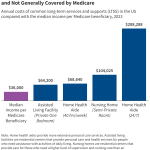
On October 8, 2024, Vice President Harris has proposed to expand Medicare to provide home care to help families who are struggling with the costs of long-term care. If enacted, this would be the first major expansion of Medicare since the Medicare Modernization Act of 2003 that added a prescription drug benefit to the program.
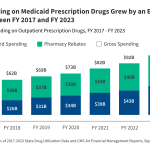
This issue brief describes recent trends in the number of Medicaid outpatient prescriptions and the spending on those drugs and examines how the pandemic and pandemic-era policies may have impacted those trends.

In a special follow-up poll of the same women voters who were previously interviewed in June (before President Biden announced he wouldn’t run for reelection), KFF finds substantial shifts in favor of Vice President Harris across a range of key election issues, including the handling of rising household and health care costs, as well as…More
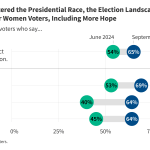
In a resurvey of women voters three months later, KFF uncovered substantial shifts in favor of Vice President Harris across a range of key election issues, including the handling of rising household and health care costs as well as enthusiasm for the candidates and motivation to vote. As the presidential election draws near, the survey…

According to a new report by the American Hospital Association, administrative costs now make up over 40% of total hospital expenses. Hospitals and health systems spend around $40 billion annually on billing and collections alone. For revenue cycle managers, the pressure is building as administrative tasks like insurance eligibility verification, claims management and payment processing…

According to a new report by the American Hospital Association, administrative costs now make up over 40% of total hospital expenses. Hospitals and health systems spend around $40 billion annually on billing and collections alone. For revenue cycle managers, the pressure is building as administrative tasks like insurance eligibility verification, claims management and payment processing…