
OIG Report Reveals High Denial Rates for Long-Term Care in Medicare Advantage Plans
NALTH emphasizes the need for better data collection and oversight to prevent unnecessary care delays and ensure equitable access for all enrollees






NALTH emphasizes the need for better data collection and oversight to prevent unnecessary care delays and ensure equitable access for all enrollees

For years in healthcare interoperability, we’ve heard data moves at the speed of trust. But what if this successful movement actually relies on the speed of utility?

Leaders from Colorado and Virginia discuss how insights can be derived that go far beyond just cost trend data
New office will oversee the design, development, delivery, and operation of CMS digital products and platforms
That is the title of a recent white paper written by myself and Kristy Piccinini alongside a team from the Health and Fitness Association (Greta Wagner, Amy Bantham, Ken Griffin, Richard Beddie, Zach Weston, Cameron Saunders). Below is an excerpt: In recent years, glucagon-like-peptide-1 (GLP-1) receptor agonists have emerged as a transformative treatment option, enabling…
Ellipsis Health has come a long way from its roots in detecting depression via vocal biomarkers. Sage, its charming voice AI agent, is now helping health plans and care management companies directly interact with patients and members, helping them with medication reminders, program recruitment, postop follow up and much more. I spoke with two of…

In the push toward a more seamless, digitally enabled future, it’s important we understand exactly how this rush to interoperability may actually harm patients, instead of helping, and what we can do to make sure they keep pace. The post Don’t Leave Healthcare’s Greatest Asset Behind on the Road to Interoperability appeared first on MedCity…

Once data starts moving across multiple systems, it becomes hard to track unless you’ve been very intentional about it from the start. The post Where Healthcare Data Systems Fail and How to Build Them Better appeared first on MedCity News.

The Plausible Mechanism Framework is a breakthrough. Turning it into treatments that reach families will take five things the framework doesn’t provide. The post The FDA Opened the Door For Rare Disease Patients — Here’s What It Takes to Walk Through It appeared first on MedCity News.
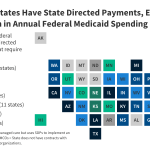
This issue brief analyzes Medicaid spending by state on SDPs that require prior CMS approval to better understand the use of SDPs before new limits in the reconciliation law take effect.