
Vermont Data Enclave Set Up to Advance Health Research
Initiative developed to provide a protected environment for Vermont researchers to access and analyze clinical data




Initiative developed to provide a protected environment for Vermont researchers to access and analyze clinical data

Rural Access Advancement Program designed to assist hospitals and hospital-owned skilled nursing home facilities in rural Georgia address short-term cash deficits

This year has seen a slight decline in digital health funding, but investors are still optimistic about the landscape. In 2024, investors poured millions into startups selling AI-powered healthcare tools, and this is likely to remain true for years to come. The post How Did Digital Health Investors View This Year’s Funding Environment — and…

A group of healthcare organizations sent a letter to Congressional leaders urging them to permanently extend Medicare telehealth flexibilities introduced during the Covid-19 pandemic. The post 350 Healthcare Organizations Call for Extension of Medicare Telehealth Access appeared first on MedCity News.

By KIM BELLARD A recent report from Moody’s Analytics, by chief economist Mark Zandi, had an eye-opening fact: the top 10% of earners in the U.S. – those who make $250,000 or more – now account for just shy (49.7%) of half of consumer spending. If that strikes you as unusual, you’re right. It is…
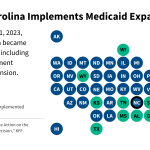
This page displays an interactive map of the current status of state decisions on the Affordable Care Act’s Medicaid expansion. Additional Medicaid expansion resources are listed (with links) below the map.

The Supreme Court upheld the constitutionality of an Affordable Care Act provision requiring insurance coverage of certain preventive services without cost-sharing. Many healthcare leaders applauded the decision, though some concerns remain. The post How Healthcare Leaders Are Responding to the Supreme Court’s Preventive Care Ruling appeared first on MedCity News.
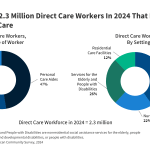
This analysis uses the 2024 American Community Survey (ACS) to provide an overview of demographic and socioeconomic characteristics of the direct care workforce, including home health aides, personal care aides, and nursing assistants who work in nursing facilities, residential care facilities, home health, and settings that provide nonresidential services for older adults and younger adults…

The Trump administration’s broadsides against scientific research have caused unprecedented upheaval at the National Cancer Institute, the storied federal government research hub that has spearheaded advances against the disease for decades. NCI, which has long benefited from enthusiastic bipartisan support, now faces an exodus of clinicians, scientists, and other staffers — some fired, others leaving…

Layoffs tied to AI adoption will not be uniform; they will vary by sector, job function, and regulatory exposure. Nowhere is this more complex than in healthcare, where legal constraints, patient safety obligations, and labor dynamics intersect with rapid technological change. The post AI-Driven Layoffs In Healthcare: Navigating Legal Risks and Operational Challenges appeared first…