


China’s transition to DRG-based hospital reimbursement

China has been transitioning from a fee-for-service (FFS) payment system to a Diagnosis-Related Group (DRG) payment system for hospitals in various cities. Under the FFS model, hospitals were reimbursed for each individual healthcare service provided, which created incentives to increase the number of services during a patient’s hospitalization. In June 2019, the National Healthcare Security…
Read More

KFF Poll Finds That Most Adults Lack Confidence in Key Health Agencies to Act Independently — The Monitor

KFF’s latest Health Tracking Poll finds that confidence in the independence of key government health agencies overseeing food and drug safety and public health is low among the public and across partisans. Most of the public also share a distrust of agriculture, food, and pharmaceutical companies to act in the public’s best interest, compared with…

Read More

Merchants of Death

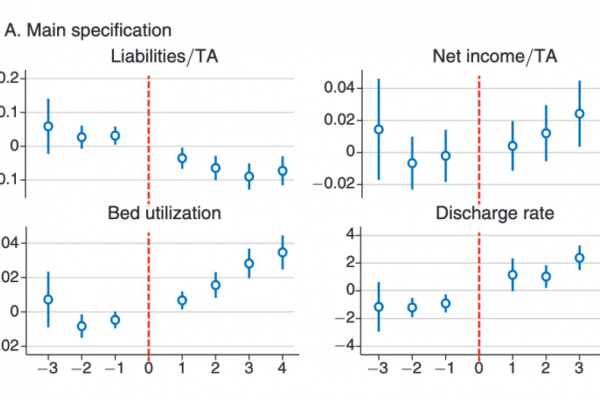
That is the clever title of recent American Economic Review publication by Cyrus Aghamolla, Pinar Karaca-Mandic, Xuelin Li, Richard T. Thakor. The abstract is below. This study examines the link between credit supply and hospital health outcomes. We use bank stress tests as exogenous shocks to credit access for hospitals that have lending relationships with…

Read More

Stick to the Science

By KIM BELLARD A year ago I wrote about disturbing news from the Pew Research Center that trust in science, and in scientists, had fallen since the pandemic. I am slightly relieved to report that a new follow-up study by Pew indicates that trust is up slightly – but still way below where they were…

Read More

From Trial-and-Error to Targeted Success: How Computational Disease Models Can Help Patients and Pharma Companies

The in-depth, constantly-changing birds-eye view of disease that computational models provide is an essential next step in linking our ever-expanding clinical knowledge and data with drug development. The post From Trial-and-Error to Targeted Success: How Computational Disease Models Can Help Patients and Pharma Companies appeared first on MedCity News.

Read More

The Future of Pharmacy Automation: How Capsa Healthcare is Revolutionizing Medication Management

[Sponsored] Pharmacies are under more pressure than ever. Rising prescription volumes, staffing shortages and growing expectations for accuracy and safety have made it clear that the old ways of managing medications are no longer enough. Automation has become the key to keeping pace with modern healthcare. It saves time, reduces errors and helps providers focus…

Read More