





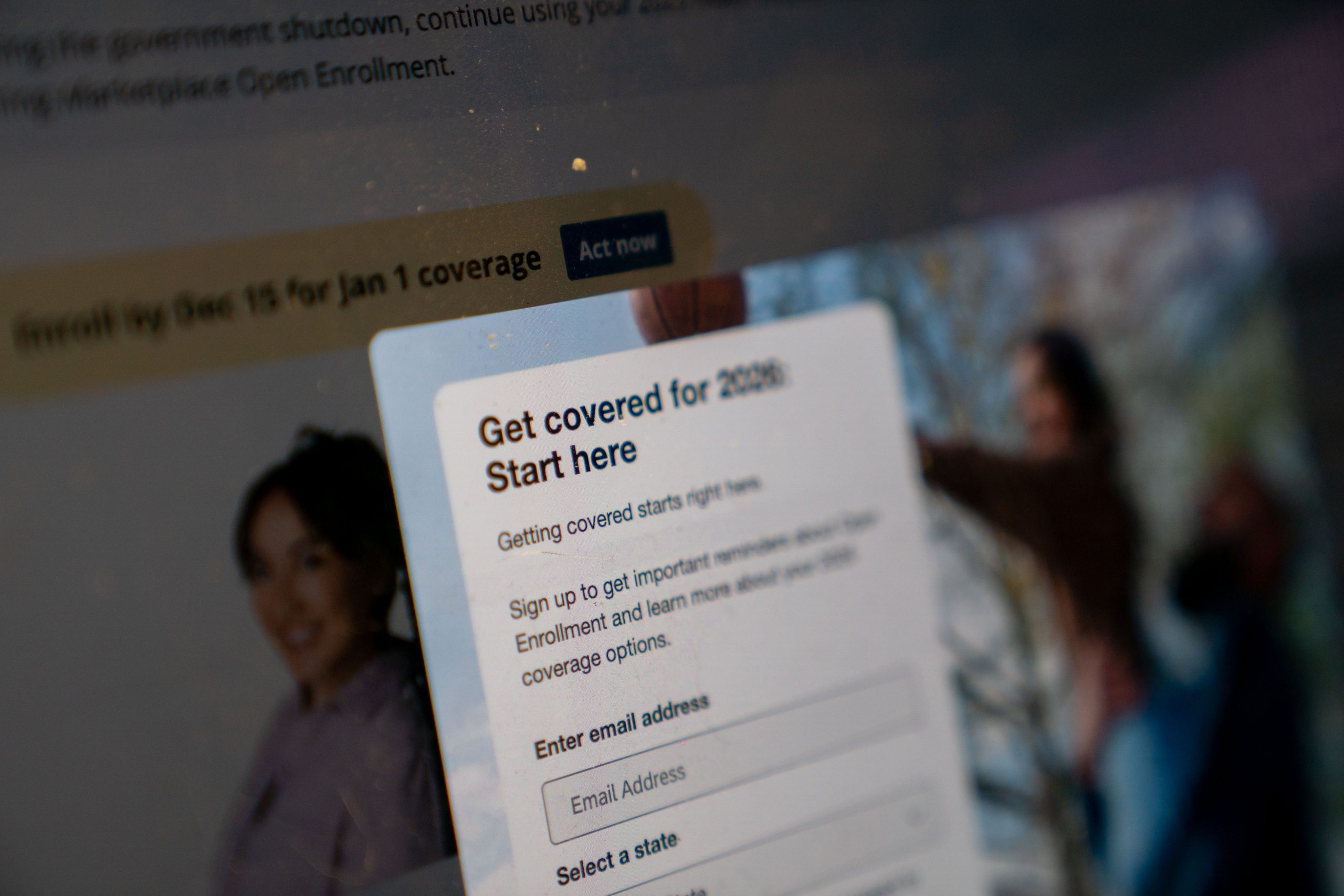
For the second year in a row, many Affordable Care Act insurers are proposing double-digit premium increases, driven by rising medical costs as well as policy changes by Congress and the Trump administration.
In preliminary filings with state regulators, insurers are seeking a median rate increase of 14% for 2027, according to an analysis of filings in 16 states and the District of Columbia by the Peterson-KFF Health System Tracker.
If those rates are ultimately approved, it would be the second-highest increase since 2018.
That would be a “triple whammy“ for consumers, said Cynthia Cox, a senior vice president and the director of the Program on the ACA at KFF, because they have already had to pay higher premiums in 2026 and saw the expiration of more generous tax credits to offset their premiums at the end of last year.
President Joe Biden sought to bolster the program known as Obamacare by enacting more generous tax subsidies, driving down out-of-pocket costs for consumers and increasing enrollment to more than 20 million Americans. But under President Donald Trump, Republicans have sought to scale back taxpayer support for ACA coverage, allowing the Biden-era enhanced subsidies to expire.
As of February, ACA enrollment had fallen by about 3 million people compared with the same time last year. While Cox and other policy experts say that’s because increased costs for the plans drove out people who feel they can get by without insurance, the Trump administration asserts that much of the enrollment growth under Biden was fraudulent.
The main factor driving proposed premium increases for 2027, as in most years, is the rising cost and use of medical care.
There’s growing demand for costly specialty medications and for the weight loss drugs known as GLP-1s, the Peterson-KFF report notes.
But the report also said that about 4 percentage points’ worth of the premium increases insurers proposed are due to lasting effects of the expiration of enhanced subsidies. Insurers expect that with young and healthy people leaving the program rather than paying higher premiums, their remaining customers will be older, sicker, and therefore costlier on average.
“It’s likely that the people who dropped their coverage were also the healthier people, because sicker people were probably going to try to make it work however they could, to stretch their budget to keep their health insurance,” said Cox, of KFF, a health information nonprofit that includes KFF Health News.
In their rate filings, some insurers also said they had to raise premiums in part because of policy changes by the Trump administration that are expected to make it harder for some people to enroll.
Together with the expiration of the larger subsidies, the new rules “account for 12.7% of the requested rate change,” the insurer UnitedHealthcare wrote in its rate filing with New York state, according to the Peterson-KFF report.
KFF Health News is a national newsroom that produces in-depth journalism about health issues and is one of the core operating programs at KFF—an independent source of health policy research, polling, and journalism. Learn more about KFF.
This <a target=”_blank” href=”https://kffhealthnews.org/insurance/priced-out-obamacare-affordable-care-act-aca-premium-increases-peterson-kff/”>article</a> first appeared on <a target=”_blank” href=”https://kffhealthnews.org”>KFF Health News</a> and is republished here under a <a target=”_blank” href=”https://creativecommons.org/licenses/by-nc-nd/4.0/”>Creative Commons Attribution-NonCommercial-NoDerivatives 4.0 International License</a>.<img src=”https://kffhealthnews.org/wp-content/uploads/sites/8/2023/04/kffhealthnews-icon.png?w=150" style=”width:1em;height:1em;margin-left:10px;”>
<img id=”republication-tracker-tool-source” src=”https://kffhealthnews.org/?republication-pixel=true&post=2257679&ga4=G-J74WWTKFM0" style=”width:1px;height:1px;”>