


By MATTHEW HOLT
Strap in for the tale of why your hero is spending most of his life down YouTube rabbit holes of cardiology videos while blundering his way around many many medical centers and exposing many problems with American health care even before he gets close to the operating table. Yes it’s Matthew Holt’s pre-surgical complications – the complications that have arisen before he even gets his failing aortic valve fixed. And yes this is the last for now of a multi-parter! Part 1, Part 2, Part 3, Part 4 Part 5
By now I have met with expert physicians and their teams at 5 major medical centers (UCSF, Stanford, Cleveland Clinic, Cedars Sinai & West Virginia University). I have spent hours talking to the AI gods at Claude, ChatGPT and Inciteful Med, annoyed the hell out of all the cardiologists and other doctors I know, and basically got enough contradictory advice that it’s all up to me.
The main decision comes down to whether I should get a TAVR or the RAVR. And because I approached Cedars about the BELIEVERS clinical trial rather than going direct to Dr Makkar, they put me into that process. The trial randomizes patients into either TAVR or RAVR, likely performed by Dr. Dominic Emerson who is the Director of Robotic Cardiac Surgery, Smidt Heart Institute, and one of the surgeons mentioned by Dr Badhwar. (I had a quick chat with him after he called me while I was on a ski boat in Lake Tahoe, although due to the shoulder pain I had not gone wakeboarding!)
The study documentation stressed – and this was backed up unprompted by one of the study coordinators – that I could back out at any time. So if I were randomized into the RAVR cohort, I still had the choice to pull out and ask Dr Makkar to do a TAVR on me anyway, or of course go to West Virginia and get surgery there.
And of course there is still the question of how risky a TAVR on my valve will be. I did take Dr Yeung’s advice seriously, and a study that Dr Makkar oversaw back in 2020 did show that (for patients considerably older than me) the risk of all cause mortality at 2 years in bicuspid valve TAVR patients was higher with bad calcification (like me). On the other hand, Dr Makkar told me that his unpublished data between TAVR and SAVR at 5 years showed no difference. He also directly told me that I was a good candidate for a TAVR and he has done more bicuspid TAVRs than anyone else. He’s also working on techniques that break up the calcification on the “join” before the TAVR, although it’s unclear if he’ll do that in the BELIEVERS trial and to me
I originally wanted a TAVR because it was a much easier recovery than surgery. I also have two more major surgeries to go through within the next few months, and it would be a big stress on me and my family to make that three. Plus, I both would be happy to contribute to a medical study and am pretty confident that in a decade or so, cardiology will have advanced a lot more and I probably wouldn’t need open heart surgery even if the TAVR valve fails sooner than the 10-15 years I am hoping to get out of it.
So I crossed my fingers and hoped that the computer would randomize me into the TAVR group at Cedars and obviate the need for any uncomfortable decisions about pulling out of the trial. And it did. I’ll be getting it done in early September.
This isn’t exactly Lebron James making The Decision, although that show lasted only 75 minutes and also went on way too long!
Some concluding thoughts
I would obviously rather have not had to write this little memoir. But given I went through it, there are several conclusions smacking me in the face.
If you have a relatively uncommon condition, you are likely to be steered into mainstream treatment. If I had been passive – well not so passive I didn’t get the first echocardiogram – I would have been sent down the path to mini-sternotomy at UCSF. Nothing wrong with that of course, especially as it does fit the current guidelines, but the level of information I was given about alternatives was low. Now UCSF is not regarded as an aggressive hospital overall. Twenty years ago it was famously compared by the Dartmouth Atlas with UCLA which is regarded as a more aggressive medical culture.
Among academic medical centers, the most striking differences were those between UCSF and UCLA. UCLA, like many other hospitals in the Los Angeles region, managed chronic illness aggressively. Compared to UCSF, UCLA patients spent 45 percent more days in acute care hospitals, used 3.5 times more days in intensive care and were 1.5 times more likely to have been admitted to an ICU during the hospitalization in which they died. They experienced 71 percent more physician visits and 37 percent more frequent referrals to ten or more different physicians.
But I do think that the medical culture there (and probably elsewhere) remains pretty paternalistic and automatic.
No one is navigating for you. I didn’t know enough at the start of my journey to ask, but no one provided me with the landscape of the five different techniques used for valve replacement. It would have been great if someone at UCSF had laid that out at the start, and discussed the pluses and minuses of what I eventually had to do myself. Possibly Included Health, Transcarent or Quantum Health or some other navigator might have laid that out, but no physician or system I met did it.
Insurers’ care management is a joke. Neither Blue Shield nor Cigna contacted me or offered anything at all about this journey. In some ways I appreciated that as I saw no denials of care, and every step was automatically pre-authorized, even though Cigna and UCSF did cause me a lot of stress with their potential mid-year divorce. But Cigna also sent me a stupid letter approving surgery for a period when I was never going to have surgery, and at Stanford pre-approved a CT angiogram FOUR days after they had just paid for an actual angiogram, and paid $832.60 (of which I owe a smidge) for an EKG that was I’m sure the same as one done at UCSF less than a month earlier and was never mentioned in the consult I had there. (I will be writing a post script of what all this cost later but suffice it to say my maximum out of pocket has been easily reached).
AI is super helpful but it doesn’t know everything and it doesn’t lead you. The general consensus is that the combination of the bicuspid valve and my age means I would routinely be sent for SAVR, but none of the AIs laid it out for explicitly me at the start. I was putting everything I got into AI (mostly Claude but also ChatGPT and Inciteful Med). ChatGPT did lay out the alternatives and it did tell me that usually I would be a candidate for SAVR because of my age. But Claude told me after my Gated CT on Jan 16 that I was an excellent candidate for TAVR because my arteries were in great shape, and I was really surprised when UCSF Cardiology told me that this wasn’t a straight choice by the patient and they wouldn’t do a TAVR on me. Claude told me that Dr Amy FIedler did RAMT surgery, when she didn’t.
But on the other hand, the ability of the AIs to ingest all my medical data, imaging reports and more and tell me exactly what they all meant was in general pretty incredible compared to what patients experienced before 2022 (or whatever we are calling the ChatGPT birth!). I am very glad I have their help. And if anyone going through anything similar wants to read the reams of conversations I’ve had with the AIs, let me know and I will share them
Getting to second opinions is challenging. My PCP at One Medical referred me to UCSF which went smoothly. Past that everything was a struggle. Stanford and Sutter both demanded referrals, even though my health plan is high-deductible PPO that doesn’t need them. Everyone needs access to your imaging, but is happy to reproduce it–after all they get paid twice. It took a lot of effort for me to get it to various centers (particularly Stanford) even after UCSF put it all up online for me to share. And I was also very unclear how the different centers got access to the images, via my sharing or directly. Then just this month Epic announced that it will put images in Care Everywhere which hopefully means that this conversation will be unnecessary from now on and any clinician at any center using Epic (including all the ones I went to) can just look them up on their monitor.
But worse than that, the patient has to endure so much time on hold, so many back and forth emails, and so much uncertainty. Incredibly even though Epic has built in messaging, you’re unable to use it with some centers (hi, Stanford!) and not to do what appear to be easy things (setting appointments, sharing images or results) with others.
Between talking to cardiologists, PAs, NPs and surgeons, I think I had 12 separate appointments (both in person and virtual), not counting the imaging and the angiogram, and I think half of them could have been done via email, and at least one (with transplant surgeon Dr Fiedler) shouldn’t have been done at all. The charges paid for all of them also didn’t relate much to time spent–more on that to come in another article.
But in the end I really wanted yes or no answers, the main one being “will you do a TAVR on me?” And it took setting myself up in five different systems to get to the answer. Special shout out to Dr Badhwar’s team at West Virginia who were by far the quickest to get back to me, and get me in front of him. And a raspberry to the team at Sutter Alta Bates who still haven’t gotten back to me even though I faxed them the referral (which they had already been sent previously) 3 weeks ago! None of this is made to be easy for the patient–even one as bloody minded and motivated as me.
The clinical professionals are superb and gracious. I would be remiss if I didn’t end on this point, as it is the most important. Every single clinician (and for that matter, med tech and support staff) I met with during this journey was polite, gracious and incredibly talented. I was reminded of my old mentor Ian Morrison’s line about academic medical centers being “islands of clinical excellence surrounded by the department of motor vehicles”. I certainly had my share of clinical excellence while dealing with the bureaucracy. But I would have been extremely comfortable putting my life in the hands of any of the physicians I met. And that after all is what this is fundamentally all about.
I shall try to get out a post-script to this piece about my Pre-Surgical Complications delving into what it all cost before I get the procedure. But otherwise, hopefully you won’t have to hear too much about it until I am out the other side. Unless of course you want to bring me some grapes in Cedars in LA in early September!
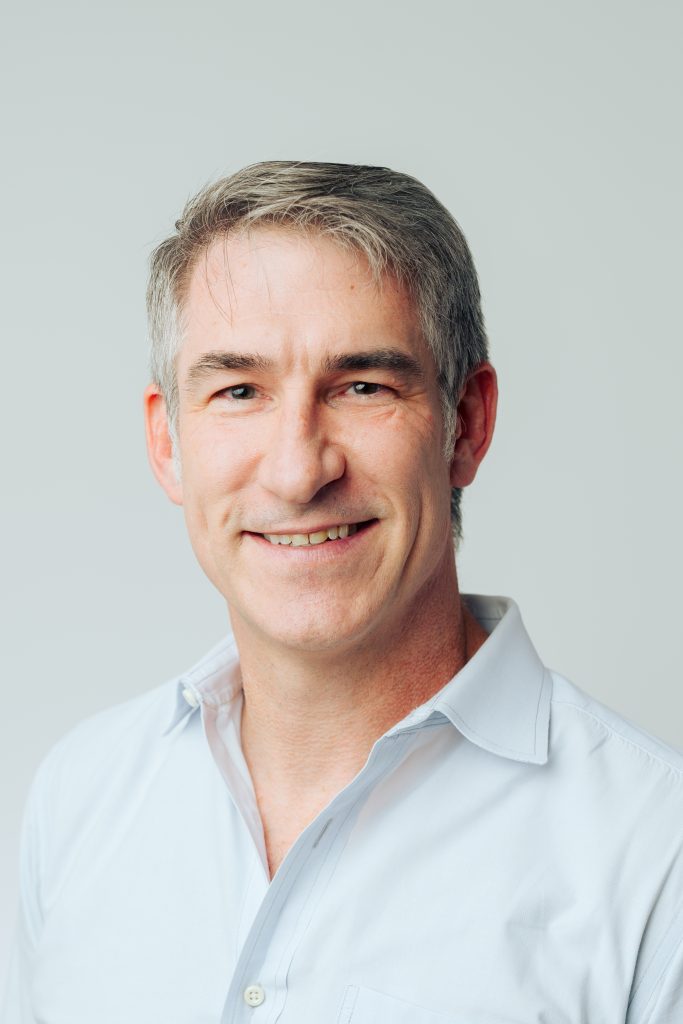
Matthew Holt is publisher of THCB