



BAKERSFIELD, Calif. — Carlos A. grew up in a family on Medicaid, which made healthcare an afterthought since the public insurance is free for low-income enrollees. But when he received a raise two years ago, he found himself earning too much to qualify for the safety net program. And when he browsed Covered California plans, he found that marketplace prices were still too steep for his comfort.
“It was a panic at first,” Carlos said.
He has a chronic immune condition that needs to be managed by regular medication. KVPR and KFF Health News agreed to withhold his diagnosis and last name to protect him from repercussions related to his health.
“I have to be able to afford my health insurance to go to the doctor, because if not, then there’s no peace of mind,” he added.
Now in his late 20s, he receives employer-based coverage through his job at an Amazon warehouse. In addition to adjusting to monthly premiums and copays for medical visits and prescriptions, he also learned he needs prior authorization for that medication he had been on for a decade. Without it, he could get only the generic version, which he’s nervous to try. He felt his insurer failed to justify the switch.
“I felt that this was a slap in the face because I’m paying for my premiums,” he said. “It’s a contract. I’m going to pay my premiums, you cover my insurance, and if there’s a copay to my medicine, I’ll pay it. So why are you playing funny business with my medication?”
Carlos is one of many voters weighing healthcare costs in California’s 22nd Congressional District, which stretches from Bakersfield up to parts of western Fresno County. It’s newly redrawn to improve Democrats’ chances, but it remains among the nation’s most competitive this cycle and could determine control of the U.S. House. It’s long been held by Republican Rep. David Valadao, who’s been voted into the seat in almost every election since 2012.
Rep. David Valadao (R-Calif.) at the U.S. Capitol on March 25, 2025. (Bill Clark/CQ-Roll Call, Inc via Getty Images)
Carlos was among dozens of people who attended a rally in Bakersfield this month in support of Democratic challenger Randy Villegas. Carlos said healthcare costs will be among the key considerations in his vote in this fall’s midterm election, calling it an issue that both candidates need to address.
“I do expect them to campaign on healthcare,” Carlos said. “They’d be very foolish not to.”
Democrats are calling out Valadao’s vote for HR 1, the GOP tax-and-spending law known as the One Big Beautiful Bill Act, which cut billions in healthcare for poor people. The last time healthcare was on the ballot to this extent, Valadao lost his Central Valley seat in 2018 during a “blue wave” after the Republican lawmaker voted to repeal the Affordable Care Act. He retook his seat in 2020 by just 1,522 votes.
Valadao has said he voted for HR 1 because it protected Medicaid, known as Medi-Cal in California, for the most vulnerable, including children, pregnant women, disabled people, and seniors. He supported a rural health fund for hospitals in underserved areas. At the same time, he said the legislation’s work requirements for nondisabled adults were reasonable and would help maintain the program.
“Polling shows that the majority of Americans want us to have our programs to be sustainable,” Valadao told TV channel KERO in Bakersfield before the vote. “Sustainable means taking care of those who need it most, and those who should be working in part of society and being productive should be. And it’s not an unfair ask.”
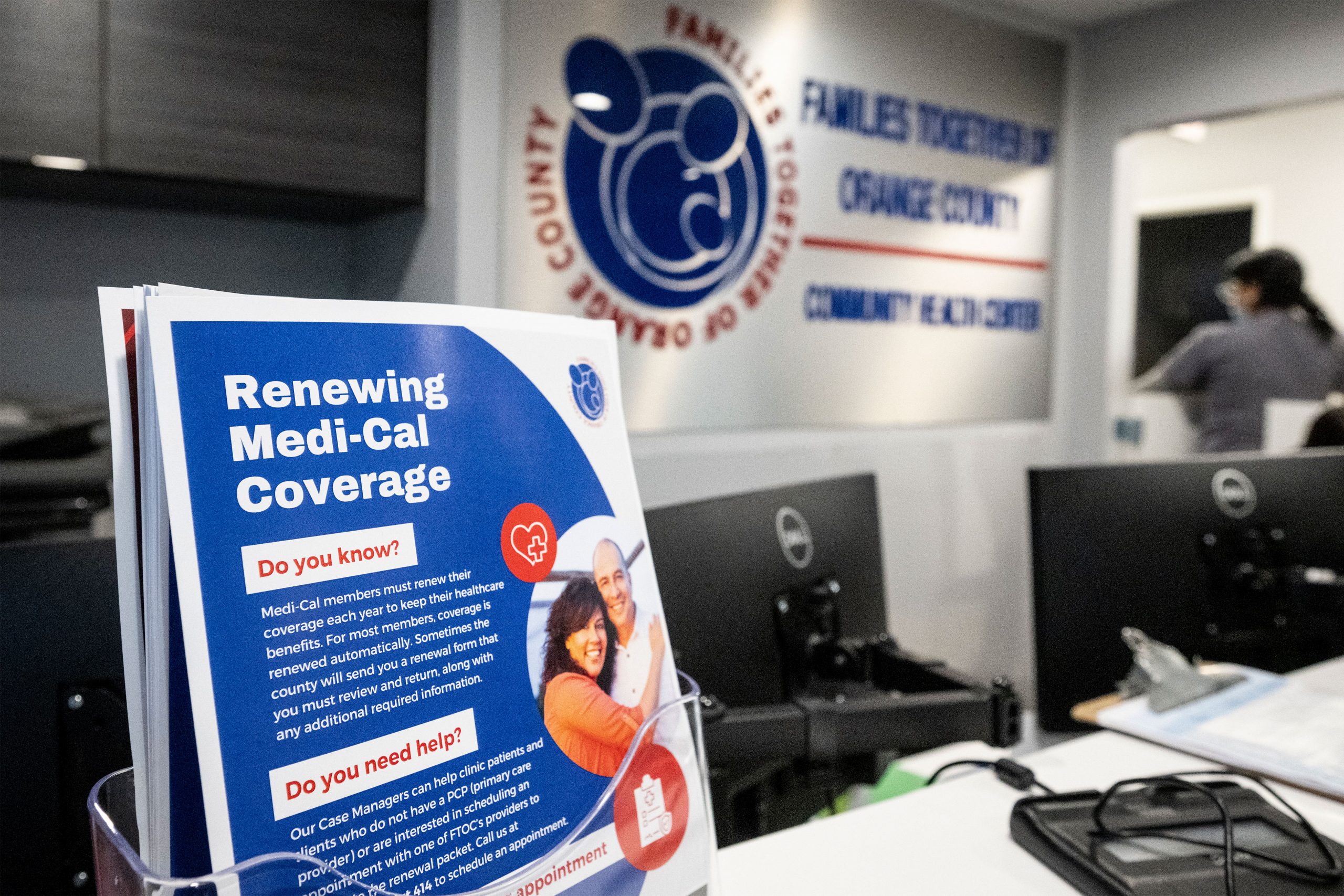
The work requirement’s documentation mandate will take effect in 2027 for Medi-Cal enrollees. According to the California Health Care Foundation, an estimated 1.1 million people are expected to lose coverage by 2030 due to the eligibility and administrative changes.
Villegas, a populist who favors universal healthcare and is backed by Sen. Bernie Sanders (I-Vt.), has highlighted how Valadao’s HR 1 vote will be felt by low-income residents across the district. The Visalia school board member said he grew up as a Medi-Cal recipient. As of 2024, the current 22nd District, which has some overlap with its redistricted replacement, had the highest Medicaid enrollment rate — 64% — of any Republican-held seat in the nation, according to KFF, a health information nonprofit that includes KFF Health News.
Randy Villegas, a Democrat running for California’s 22nd Congressional District, campaigns in Bakersfield on May 23. (Myung J. Chun/Los Angeles Times via Getty Images)
“David Valadao voted to cut healthcare for nearly 70,000 people in the Valley to give tax breaks to billionaires and his wealthy donors,” Villegas said in a statement. “In Congress, I’ll fight to reverse those cuts and lower healthcare costs.”
Valadao’s office didn’t return requests for comment. His campaign touts his support for quality, affordable health coverage and maintaining access for the most vulnerable. Polling also finds that the Trump administration’s recent withholding of Medicaid funds from states is resonating with Republicans, with 55% saying it’s important for candidates to discuss fraud in government health programs. Republicans in swing districts, including Valadao, have begun airing ads emphasizing reform.
But many in the electorate remain undecided in this district where nearly a quarter of voter registrations are nonpartisan. Some said they haven’t heard enough from candidates about affordability solutions, which they hope will change because healthcare costs top the list of their economic anxieties.
Matthew Depue, who lives in Hanford and has private health insurance through his employer, said he has been fortunate to have reliable coverage. His healthcare premiums affect his monthly budget, but he said he hasn’t had to delay care or choose between paying medical bills and other necessities.
Still, Depue said, rising healthcare costs are quickly becoming harder to ignore. Last year, federal lawmakers declined to extend enhanced tax credits, which state officials say contributed to an average 10% premium increase for Covered California plans.
He also sees how affordability is pushing people across borders to find cheaper treatments and medications.
“People go from here to Mexico to get stuff done because it’s so much cheaper,” Depue said.
Even though healthcare is important to him, it isn’t the only issue driving his vote. Depue, who doesn’t know whom he’ll vote for, said he would evaluate candidates based on everything they stand for, including their positions on things like taxes and the difficult job market. District 22’s voter registration is 42% Democratic, 26% Republican, and 24% no party preference, according to the California secretary of state’s May report, the latest available.
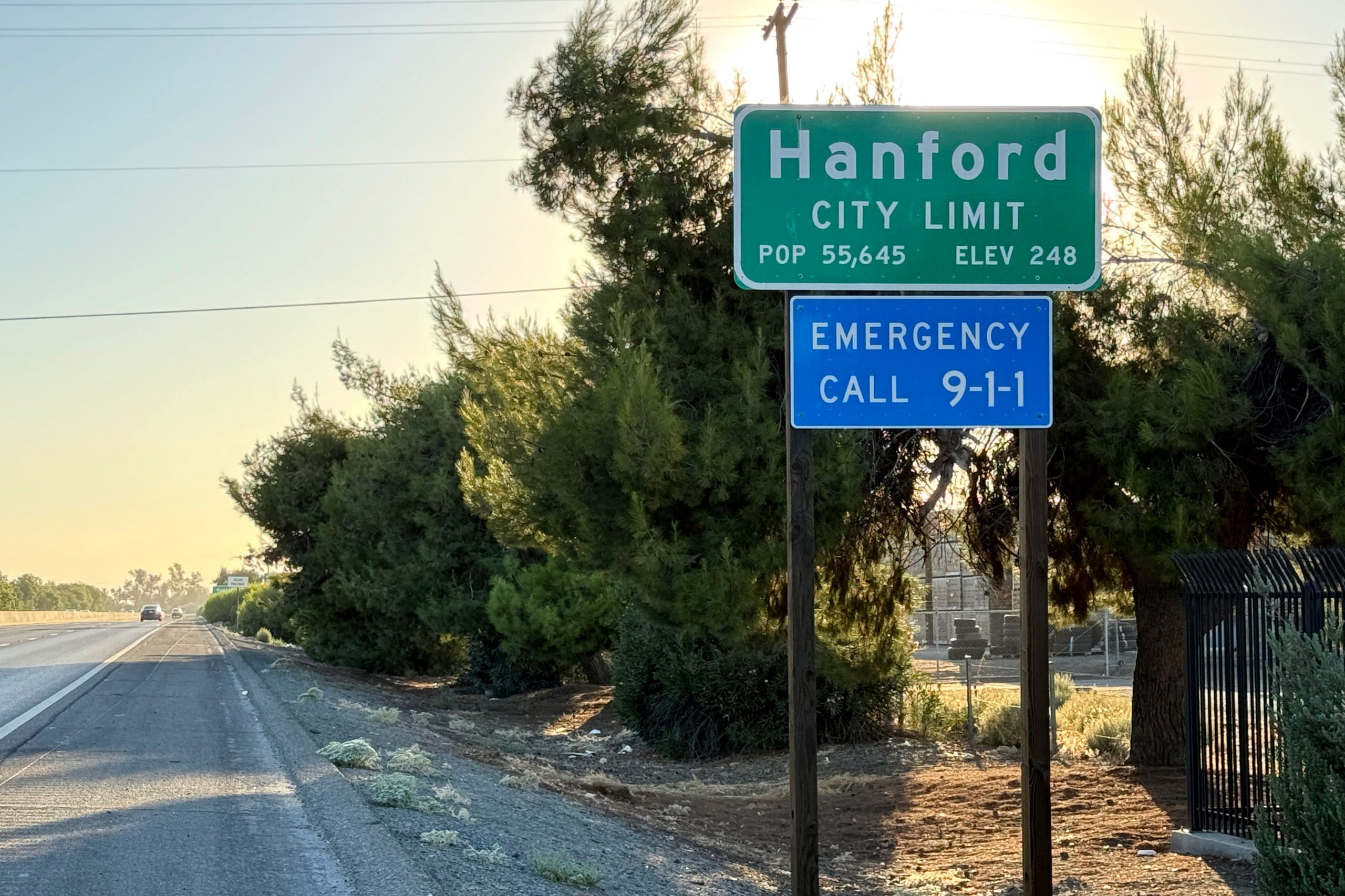
Hanford, with a population of roughly 62,000, is the seat of Kings County. (Cresencio Rodriguez-Delgado/KVPR)
For Hanford resident Patreza Newton, affording healthcare has become deeply cumbersome. She hopes that whoever wins the election will work to prioritize healthcare, saying the current health system is unaffordable.
She used to purchase her own plan under Obamacare and is now covered by her church’s insurance. But to keep monthly premiums affordable, she chose a high-deductible plan, which means she has to pay out-of-pocket for some prescriptions and specialist visits.
Newton said she falls into what she calls “the in-between,” people who earn too much to qualify for Medicaid but still struggle to afford coverage.
Years ago, Newton was hit with a hospital bill of roughly $65,000 after surgery and had to apply for financial hardship assistance because she couldn’t afford to pay the bill.
As she considers how to vote this fall, she said she isn’t looking for overwhelming promises but rather a leader who understands what families are experiencing. She’s undecided on a candidate, saying none has shown the initiative she is looking for.
“I do think there should be a way that people can afford it,” she said, “no matter who they are.”
This article is from a partnership that includes KVPR, an NPR affiliate in central California, and KFF Health News.
KFF Health News is a national newsroom that produces in-depth journalism about health issues and is one of the core operating programs at KFF—an independent source of health policy research, polling, and journalism. Learn more about KFF.
This article first appeared on KFF Health News and is republished here under a Creative Commons Attribution-NonCommercial-NoDerivatives 4.0 International License.