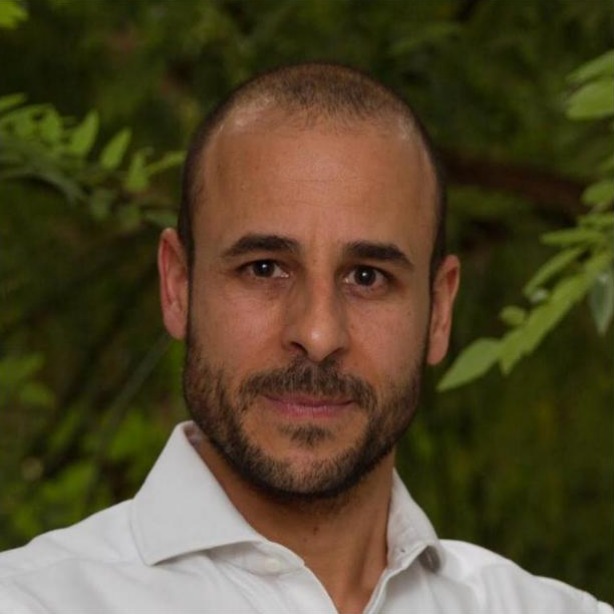



Lirio Health is an interesting under-the-radar company, which works with plans, providers and others to try to influence the behavior of their members and patients. Of course, everybody wants to change the behavior of human beings, and it’s been proven over the years to be very hard. Lirio probably has more PhDs per square foot than any other company in this sector. I spoke with one of them, the Chief Behavior Officer, Amy Bucher, and she showed me a wide variety of case studies in which they are using a wording approach and psychographics to nudge people to better behaviors. A great discussion on how and whether we can use psychology to improve health.–Matthew Holt
The transcript (made by Youtube and Claude so blame AI for any mistakes!)
Matthew Holt, THCB
Matthew Holt, with another THCB Spotlight. I have with me Amy Bucher. Amy is the Chief Behavioral Officer, scientist, and intellectual powerhouse, I think, behind Lirio. Lirio is a company in the behavior change space, so you’re absolutely in the right place. Amy has a long history of hanging out in the world of healthcare design and healthcare media, with stints at what was Health Media before it was J&J, and after it was J&J, and then Mad*Pow, a company I knew well, because Mad*Pow was run by your fellow Amy, Amy Cueva, who I think went on to become chief design officer at UnitedHealthcare at one point, and is now doing something else. I know she just harassed me recently.
But Amy, welcome, and tell me a little bit about what the basic idea is that Lirio is helping with. We hear about behavior change, and we don’t know if it’s possible. Tell me what Lirio is trying to do. What’s the objective?
Amy Bucher, Chief Behavioral Officer, Lirio
Yeah, and thanks for having me. Lirio is really premised on the idea that personalizing how we talk to people, and giving them what they need to overcome their barriers to action, is what will engage patients and actually get them to do the things that are recommended for their health. We know that in healthcare, adherence and patients taking action has been a consistent problem. I’ve been working in this space for over 20 years, and while we’ve solved some challenges, there are still so many that remain.
But now we have the technology, especially with artificial intelligence, where we can look at a huge amount of contextual data and really figure out the right way to talk to each person, at a specific moment in time, about different behaviors. We’ve had approaches in healthcare like segmentation, which are so much better than generic, one-size-fits-all messaging, but which still miss the mark. As much as you might be a certain type of person when it comes to — we were talking earlier about mammograms — mammogram programs, at least for me, that doesn’t mean I’m that same type of person when it comes to my vaccines. Or if I’m actually diagnosed with a serious health condition, that segment won’t necessarily carry through. We haven’t had a mechanism to accommodate that kind of segmentation drift: how do we understand how people are shifting in the moment and changing over time? So what Lirio really does is take in, and in fact create, a large amount of data and figure out the optimal way to communicate with this individual at this point in time.
Matthew Holt, THCB
Broadly speaking, we’ve got quite good outside of healthcare at moving people around, in areas like e-commerce and retail, combining advertising with information. We seem to be getting very good at it — perhaps too good at it in terms of politics, voting, campaigns, misinformation, and God knows what else. But what is the state of the science behind this? Where did you originally come from, in terms of the state of the science of behavior change? How much more effective are we now than we were when it was basic? Go back 100 years, really basic, general generic advertising, then more segmentation and targeting, obviously turbocharged by the internet, and now AI and tons of data. We had the big data era, and now we have AI. How much better have we got? And then we’ll talk about healthcare.
Amy Bucher, Chief Behavioral Officer, Lirio
It’s an interesting question, because it’s sort of how much better could we be, and how much better are we actually? There’s what we could do with the science, and then there’s what we actually do when we get into the messy real world and have to negotiate with legacy technologies and business rules and so on. I do believe, and have seen lots of evidence, that behavioral science makes a difference in how we can activate people around their health. I wouldn’t have devoted my career to this otherwise.
Matthew Holt, THCB
Before we get into health, let me ask you how much better we’ve got outside of health, in these other areas like retail.
Amy Bucher, Chief Behavioral Officer, Lirio
Oh, a lot. And I say this as sometimes a victim of the behavioral science, because being educated in it doesn’t help you. Lord knows how many hours I’ve lost to TikTok, or even Netflix. One of the things those technologies specifically do — or even Facebook, a product which I quit years ago, to the benefit of my mental health, because it’s so good at this stuff — is pick up on situational signals: not just what am I interacting with, but when, and for how long. They use those sources of data too, which are really powerful in getting people to — in their case — spend more time with their product. What we’re trying to do is get them to spend more time actually with their health care. But it’s all that context that I think makes a huge difference. It’s not just what I would call traditional behavioral science, of what are you doing.
Matthew Holt, THCB
If I like putting things on scales of one to ten: generic advertising was a one or a two, and market segmentation, sort of pre-internet, was a three or four. Outside of healthcare, are we now an eight? A ten?
Amy Bucher, Chief Behavioral Officer, Lirio
My instinct is to say an eight.
Matthew Holt, THCB
Okay. So it’s pretty good. The fact that ads follow me around the internet because I expressed an interest in plumbing or something — it’s gotten pretty good at inference. Now let’s go to healthcare, because in the case of other behavioral mechanisms, it’s trying to get us to buy something, vote for somebody, send money somewhere. There’s a transaction involved. Healthcare is a real pain in the rear, because you’re trying to do transactions, but you’re also trying to get people to change how they’re thinking and how they’re behaving, and these changes tend to have the unpleasant artifact of cost or activity being required up front, and the benefit usually coming a long time down the road. We know that’s hard for people in general, and it seems to be getting harder — judging by my analysis of society, which is observational only.
So where’s the state of play in behavior change in healthcare? You’ve been doing this for a long time. How are we doing with people who have chronic diseases, where we’re trying to change diet, we’re trying exercise? We’ve got some drugs that seem to be working on the diet side. But broadly, going back to my scale, where was healthcare, and where is healthcare?
Amy Bucher, Chief Behavioral Officer, Lirio
Oh boy. Were we negative before?
[laughter]
I mean, healthcare certainly wasn’t good. I’m going back about 20 years when I think about this. I would say maybe a two or a three, and I think maybe now we’re at a four or a five. We have some good reasons for that, and some maybe not so good. The good reasons are that we care more about data privacy in healthcare than we do in consumer interactions. The things that I do with my doctor are not available as data as readily as the things that I do on my internet browser, which is sort of for sale to the highest bidder — or honestly, anyone who’s willing to pay anything, probably. So we protect healthcare data more than other sorts of data, and that limits the way we can use it to personalize and engage people. I think that’s probably a good thing overall, but we also sometimes take it too far.
One of the things I see a lot in my research is that patients get frustrated with healthcare because we know we’re sharing our most private, personal data with our doctors, with our pharmacies, with our insurance companies, and then we have an interaction with one of these organizations and they’re asking us all the same questions again. It’s like they don’t talk to each other, and they don’t even seem to remember the things we say to them. For all that people find some of the consumer advertising creepy, we actually expect our healthcare organizations to know things about us, and then feel surprised when they don’t. So I think we have a lot of latitude to use the data that we do have a little bit more assertively. Yes, data privacy matters a lot, and we need to be really thoughtful about how we protect that data, but even the organizations that already have it are not using it the way they could be. So that’s one part of the problem: can we get the data?
Matthew Holt, THCB
Speaking as somebody who’s been involved in a lot of surgery and a lot of healthcare visits lately: my name and my birth date, I know very well. I’ll say them six times in one visit. That’s just for identification, so they know they’ve got the right person. They have to be careful, and obviously there’s lots of checking going on. But yes, there’s a lot that clearly could be done better by those organizations, because of data limits.
But there’s the other side of the equation, which is that you’re asking people to do hard things, right? Change their behavior, eat better, take their medications, get their vaccine, whatever it happens to be. Life gets in the way, or, hey, that chocolate bar is really good. There are these other forces, the people who make high fructose corn syrup and whatever else, who are counteracting what would be good for me. And we know the numbers. I was judging an event yesterday where there was a company doing remote heart monitoring that had gotten hypertension control up to, I think, 85%. That’s great, because the California statewide average for people with hypertension, I think, is 50% at goal, out of people who have it — let alone the people who have it and don’t even know they have it. So is five okay, and maybe we get to a six or a seven, but we’re never going to get to an eight or nine? How hard is this problem?
Amy Bucher, Chief Behavioral Officer, Lirio
Again, it’s a hard problem that is actually kind of easy in some ways. We have some of the tools we need to be better at this. Some of the work we’re doing at Lirio, I’ve been blown away by. You just mentioned hypertension control: we’re working with Cone Health in North Carolina on hypertension control. They have a series of nine clinics for high-risk hypertension patients, and they’ve been doing this whole big effort, for which they’ve gotten a national award from The Joint Commission, around how they get, in particular, their Black patients to hypertension control. The goal is to have 70% of them reach control. They’ve done well in the past with their overall patient population, but if you break it down by race, it tends to be the white patients who are doing well. So they’ve really focused on the health equity piece of this, received their national award, and Lirio is part of their work.
What we’re basically doing is trying to nudge the people who don’t engage after they’ve gotten the patient portal messages. They’re overdue for their doctor’s appointments. Part of what Cone is trying to do is have the doctor talk to you at the appointment about making the next appointment, but if you never go to the appointment, obviously the doctor isn’t having that conversation with you. We’ve been able to get upwards of 60% of these patients to show up for at least one doctor’s visit. So we’re using some data that we have about them, and we’re using behavioral science to speak to them and hopefully address the actual reasons why they haven’t been showing up to the clinic. Otherwise, these might have been patients who were left behind. That’s not 100%, that’s not getting us to ten out of ten, but I think having these sorts of things to address the pockets of the population that haven’t responded in the past can get us a lot further along the way. I don’t want to say it’s easy, but we know how to do it.
Matthew Holt, THCB
Go a layer deeper into how you do it. What kind of data is Lirio collecting? What’s the secret sauce behind the algorithms, the wizardry? What are you collecting, what’s going on internally? And then I’d like to see what it looks like on the other end. But first, explain what is new about what Lirio is doing in behavioral science.
Amy Bucher, Chief Behavioral Officer, Lirio
Sure. When we start, we can work with whatever type of data our client organization has available to give us. At a minimum, we need to know who we’re communicating with, we need to have consent to communicate with them on the channels, and then we need to know who’s eligible for what, which is typically some degree of health background. With the hypertension example, we know who has a diagnosis of hypertension, when they last visited their doctor, and when they were supposed to come in, so that we can say: yes, this is a patient who’s overdue for that visit. Some organizations will give us a lot of data on the population we’re nudging, which we can definitely use to make more informed first outreaches, and some will give us the absolute minimum. It doesn’t really matter, though, ultimately, because our secret sauce is that we’re creating new data every time we nudge somebody.
My team builds a logic model for every set of nudges. Basically: what are the barriers that prevent somebody from taking this action, and what are the behavioral science techniques we’re going to use to overcome those barriers? We write all the content that uses those techniques. Then when we send a nudge and somebody responds or doesn’t respond to it, we’re learning whether this is a technique that’s effective for this person, for this behavior. That includes the context of, hey, we text messaged on Wednesday at 2 in the afternoon about a mammogram, and Amy opened that text, clicked the link in the text message or didn’t, scheduled the mammogram or didn’t, and then ultimately, did she show up for that mammogram? So we’re tying together the behavioral science outreach to the individual’s behavioral response, and that’s what’s really allowing us to develop this picture of what a person responds to in terms of outreach.
Matthew Holt, THCB
How much does it matter that you know a lot? You get a lot from what you’re doing. Do you get pretty quickly to where you’re pretty smart about what to do next from just your own data, or does it help if you know a decent amount more about people and their health status, and is that information easily available?
Amy Bucher, Chief Behavioral Officer, Lirio
It depends on the behavioral space, and it’s also because we bring trained AI models to our implementations. If it’s a space where we’ve done a lot of work — vaccinations is a place where we have nudged millions of people over four years — we can nudge a new population with minimal data and be pretty effective very quickly. If it’s a new behavioral space for us — I’m trying to think of something we don’t do — oh boy — actually, cancer treatment. We do a lot of cancer prevention and screening, but we don’t do anything yet in the space of cancer treatment. So let’s say we were doing that. It would probably take us longer to be effective.
We do typically see a sort of hockey stick in our behavioral conversion data, where to start, we do fine. We’ve actually done tests where it’s just the behavioral science, no AI, no personalization — let’s just use our behavioral science messaging against a standard of care — and we outperform that. As you would know, behavioral science messaging does well compared to just flat health messaging. But the AI takes a little bit of time to learn, and I guess that curve gets pushed out a little bit if we’re in a new space with less data.
Matthew Holt, THCB
When Lirio gets engaged by a health plan, hospital, pharmacy — a big healthcare organization trying to reach consumers — are you generally regarded as messaging outreach that is online, text, phone, whatever? Or is there a change that has to happen when the doctor and the patient, or the person in the call center, are reaching the patient as well? Is this a bolt-on, or are you a fundamental change in how ABC Health System is trying to figure out how to deal with people?
Amy Bucher, Chief Behavioral Officer, Lirio
Our aspiration is to be the latter. We really see ourselves as an intelligence capability, and part of what we’re doing with the behavioral science is not just putting content into the product. When we implement, we go through a process we call behavioral discovery and design. Actually, you mentioned that I used to be part of Mad*Pow; it’s very similar to the work we would do at Mad*Pow. We want to map the patient action paths, we want to understand what we’re asking people to do, and offer feedback to help make that a smoother process for people. And then there are parts of our product that we can also use to support people, like a call center rep or a provider, but it depends on how the client wants to use us.
We have some clients who say, “We want you to just take over our mammography outreach, because we’re really struggling there.” In that case, it does feel a little bit more like a bolt-on, perhaps. But we work with a national retail pharmacy chain, and we’re doing all of their healthcare communications. In that case, it’s really an integral part of how they interact with their pharmacy customers, and what we’re seeing is that, because of that, the learning system is superpowered. Just from when we first went online with prescription refills, we were able to raise the percentage of people refilling their meds from their existing customer base by several raw percentage points. Out of the box, that’s pretty incredible. And we’ve had experience nudging their pharmacy patients about vaccines for years now. So that’s really where the power of what we do gets unlocked, at that sort of full integration.
Matthew Holt, THCB
So why don’t we take a look at what this looks like in actual reality. I think you have a couple of examples of things that you’ve been doing.
Amy Bucher, Chief Behavioral Officer, Lirio
Absolutely. One of the things I’ll emphasize is that we work really closely with our clients to make sure we’re embedded in their existing patient experiences. We white label the product. Patients have not heard of Lirio. We want to leverage that trusted brand and create a consistent experience across their touchpoints. So what I’m going to show you could look different depending on who we work with. This is the generic demo.
Matthew Holt, THCB
I get it. Other people will look at this too, so I want to make sure they get it. Who is this health system we’re discussing here?
Amy Bucher, Chief Behavioral Officer, Lirio
It’s our ABC Health, or whatever it is.
[laughter]
Matthew Holt, THCB
Okay, great.
Amy Bucher, Chief Behavioral Officer, Lirio
So this is precision nudging for mammography, which I mentioned. It’s actually our OG precision nudging intervention, which we first launched in 2019. It’s geared toward getting women who are overdue for their screening mammograms to come in and do that. What you see here on the left is what a patient would get, and this is an email. On the right is a visualization of the behavioral intelligence behind the scenes. It shows what barrier is being addressed and which behavior change technique we’ve chosen to use to address it. The “BCTTv1” thing refers to the COM-B model and the Behaviour Change Wheel, which is the framework behind the scenes that we use to structure all of this.
Matthew Holt, THCB
Is that well known in behavior change, or is this a behavior change technique that you’re adopting?
Amy Bucher, Chief Behavioral Officer, Lirio
It’s well utilized. It’s all made publicly available, and one of the reasons we like it is that it’s just an organizing framework. It still leaves you a lot of space under the top level to do your art, but it creates this replicable, evidence-based approach.
Matthew Holt, THCB
Yeah, it’s good.
Amy Bucher, Chief Behavioral Officer, Lirio
So here’s the email. It’s personalized: you can see here, it’s been over a year since your last screening. One thing you don’t see in this particular image is that we can demographically tailor the images, which I know from all the way back in my health media days helps to engage people — seeing folks similar to yourself in the images. The call to action is really to book the mammogram. Like I mentioned, that’s going to be the key piece of data that we train on: whether the person actually did that or not. We could also do this in SMS if that was indicated as better for this person, or if that was the only thing they had consented to. Or we could do something like an app push notification. What you see here is that across all three channels, the behavioral science methods remain consistent. We build our content in a way where we can flex to the form factor instead of changing the message entirely.
Matthew Holt, THCB
So the message is slightly different, but all related, and basically the same technique.
Amy Bucher, Chief Behavioral Officer, Lirio
Right, exactly. There are things you need to change about it. For example, we also do MyChart messaging, and even though that looks like an email, it doesn’t have a subject line, so what they do instead is make the subject line the first part of the message. We structure the messages differently for different form factors. But I’m going to say “not scheduled” here, because I want you to see what happens: she’ll get another nudge. Typically when we nudge somebody, the frequency is something we can use the AI to determine, or sometimes our clients will say, we want to message people once a week until they schedule. But if somebody doesn’t respond, the next message they get will be different. It will be selected by the AI, knowing that whatever we sent last time wasn’t the thing, or at least not the thing at that time. So here you see a different barrier being addressed, a different behavior change technique, and again it could be in any of these form factors. It could also be in different languages. We work across cultures and across languages; I just spent the last week in Europe doing some work over there.
This time I’m going to have her schedule. She’d book the mammogram, and it would deep link her into a scheduling page, or potentially inside MyChart. Sometimes our clients use phone numbers here. We’ll have her confirm this appointment, and she receives a commitment message. I’m just going to happy-path this and have her say she’ll be there, and then she attends. Basically her precision nudging for mammography journey has ended for now, and you can see a recap of what she — I say she, it’s my name — received and completed.
One of the things we actually measure: people often become eligible for precision nudging when they’re overdue for something. Not always, but a lot of our clients have basically said, “We want you to work with the people who are not doing what they’re supposed to do.” If someone gets nudged by us and goes and has the mammogram, for example, and then they don’t become eligible next year because they’ve proactively scheduled and don’t go overdue, that’s a big win, even though they don’t show up in our outreach anymore.
Matthew Holt, THCB
I think that’s great, and that seems fairly obvious, right? I get a lot of text messages. Most of the text messages I get are saying, “Please donate to some political campaign,” because of the time of year we’re in at the moment, coming up to the midterms. They’re obviously trying lots of different things, trying, “please just give a dollar.” It’s a standardized behavioral change technique that’s been around for a long time, but there’s a lot going on behind the scenes here, right? Obviously you’re changing the message based on this. For something that’s relatively simple, like booking an appointment for something you should have once a year, what’s the level of complexity going on, and how much did AI, and what we’ve learned in the last few years, add to this?
Amy Bucher, Chief Behavioral Officer, Lirio
The level of complexity, I think of that, first of all, in terms of the logic model that my team is building. In general, for most of these behaviors, we’re identifying 15 to 25 barriers that are broadly applicable. We’re looking at the literature, we’re doing some of our own research, but basically, if you look at a population of people, what’s the majority of reasons why they might not be doing this? Then we build out message assets, at least one message asset per each one of those barriers. So you’re looking at libraries that have potentially, I don’t know, five, six, 700 combinations just from those base pieces.
Matthew Holt, THCB
Even for what is a relatively, quote-unquote, basic transactional thing, like, can I get you to sign up for a moment? There’s a lot going on behind the scenes.
Amy Bucher, Chief Behavioral Officer, Lirio
Well, maybe not transactional so much, because we do sometimes nudge things like enrolling in the patient portal. Those don’t tend to have as many or as serious barriers as something like prostate cancer screening.
Matthew Holt, THCB
But it’s a one-time thing. And I know you have some other examples which are longer journeys.
Amy Bucher, Chief Behavioral Officer, Lirio
Well, and again, because it’s AI, it’s a learning technology, and the more data that’s available, the easier it is to learn. So we are best suited to behaviors that recur more often. That’s kind of why our capabilities are best with that whole intelligence-layer implementation instead of a bolt-on. Even if each behavior only happens once a year — colonoscopies once every ten years, if you’re lucky — if we’re nudging you about a couple of different things, we can learn more about you anyway.
Matthew Holt, THCB
Okay, I see. So perhaps you can show me one that’s a little bit different, where you’re talking more about a patient journey.
Amy Bucher, Chief Behavioral Officer, Lirio
Yeah, for sure. I’m going to show something we’ve built for the life sciences space, so it’s really focused on medication adherence. You’ll see that it appears there’s much more going on, but that’s because the intelligence view on the right is built out in much greater detail, showing some of the system inputs.
Matthew Holt, THCB
Who am I, looking at this? I’m probably somebody in a call center who’s helping do adherence management or something like that.
Amy Bucher, Chief Behavioral Officer, Lirio
Well, there’s a piece of it where yes, you would be that person. This is for a fictional specialty pharmaceutical product, and as you know, these are incredibly expensive medications with high consequence to non-adherence, so these organizations do have telephone support representatives for their patients. Part of what we built here is something that they can look at when they’re on the phone with the patient.
I went through Maria’s demo a little bit just so that I could populate this. What it’s doing is recapping what Maria has actually done in the system. She’s received her medication, she’s done one refill, but she hasn’t completed her labs, which is a risk for non-adherence. And it’s creating a non-adherence risk score for her. It’s using data that we were perhaps able to pull in, like her physician enrolled her in this program and provided information about her insurance and her health history. Then there’s third-party data available that we could use around things like social determinants of health. We derive data all the time from things like her zip code: we can tell income level, and how far she is from the nearest pharmacy, and things like that. All of that goes into the non-adherence risk score. The engagement score is based on her interactions with the digital product.
The phone rep could be looking at this and saying, “Hey, Maria’s at really high non-adherence risk and she’s only so-so engaging with digital. This is somebody who it’s worth outreaching to by phone, or trying to get involved in something that’s a little more high-touch.” So it tells the life sciences company where they might want to invest the patient support money they have. And on the left, it has some feedback that the patient support rep could be using on the phone with the person. A self-efficacy phrase that resonates with Maria might be, “It takes effort some days.” She’s told us in her interactions with the system that this isn’t easy, which we know, of course, but now we know that this language is going to resonate back with her. We want to make the intelligence our system is gathering human-readable for the people who are supporting the patients in the real world.
Matthew Holt, THCB
So these data and these scorings — there’s a combination of AI-based inference from data you’ve got and data surrounding the person, and then some direct connections back and forth, some notes taken, kind of like a medical record, from the conversation. And what’s the messaging look like? Can we go back to the message she received?
Amy Bucher, Chief Behavioral Officer, Lirio
Yeah, absolutely. Again, this is for life sciences, so you would be seeing this inside an authenticated experience, and we want to really limit the self-report here, because adverse event reporting is a concern in this area. Here it’s letting her know she has to have a blood test in about two weeks, and it’s asking her to let us know: did you schedule this or not yet? She can say “not yet.” It also has celebratory sorts of things: your first month on Clarenza is almost done, that’s a real milestone. And we give her the opportunity to ask to connect with the pharmacy if she wants, so she can schedule a callback. I’m not going to click that, because it works.
[laughter]
Down here, this is just for operating-the-demo purposes, to say whether she received the refill or not. In the real world, we’d be receiving this data from a database that we connect to. As much as possible, we want to be getting that sort of objective, real-world data. There are cases where we do ask people to self-report, because how motivated are you feeling is not something you can really get from anything except self-report. Here it’s asking an adherence question: how many days out of the last seven were you able to take it as prescribed? I’m going to have her say “most days.” It gives her a little bit of feedback, but now this is something the phone rep can use as well, to say, “Hey, I’ve noticed you said you’re not doing this every single day. Can we work on that? Can we talk about that?”
Matthew Holt, THCB
So in general, you’re essentially combining vast amounts of data from different places: some inference, some direct, some self-reported, some from, did a refill get issued, that kind of stuff. And obviously there have been a lot of complications about getting this data right, but there’s much more of this data around now than there ever was before. Then you’re essentially giving informational support to a phone rep or somebody who’s working directly with the patient, and obviously motivational support to the patient.
What’s the most important part of this? What moves the needle on patient behavior the most? We hear that some people like human contact, some people prefer getting texts or messages. If you’ve got something that’s complex — we hear these terrible numbers that 50% of people on chemotherapy don’t finish their courses, even though it doesn’t work if they don’t, and it costs the pharma company a fortune in lost revenue — what is working here? What’s moving the needle?
Amy Bucher, Chief Behavioral Officer, Lirio
I think part of it is actually addressing the barriers that people experience in a direct way. You don’t see that a lot in healthcare communications. When you do see healthcare communications that try to address barriers, they don’t select what might be most applicable to an individual. I have some provider organizations that I’ve received care at, and I get these emails from them that are literally two, three pages long. I have a high need for information and I’m willing to process things, and even I’m like, ugh, I can’t do it. Your average person is not going to read through all of that. But we’re sending very short messages that directly address something we believe is relevant to that person, and I do think that makes a difference, that it doesn’t feel generic.
We do a lot of user testing, and we consistently hear that people feel like, “This cares about me. This seems to think about me as a person.” So it’s giving them something a little different from what they’re used to getting from healthcare organizations. I think that cuts through the noise and helps it stand out. And I do think that’s probably one of the most important things, because if you don’t get people’s attention, it doesn’t really matter what else you put into the message. It’s not going to do anything.
Matthew Holt, THCB
For a program like that, where you’re going to an ABC pharma company and helping them with a high-cost drug that obviously has to be taken to work, what are the kind of numbers you’re seeing? Where were they, and where do they end up after the program?
Amy Bucher, Chief Behavioral Officer, Lirio
Well, we just submitted a paper about one program that we’re doing with a health system. They were sending out an email to people around their birthdays that was, welcome to your new year, here’s the preventive healthcare you’re going to need in the next year. We took that on starting January 1st and added our personalization and behavioral science to what they were doing, and only nine months in, we are at 2.5 times the number of preventive care appointments and screenings that people have had compared to last year. So it’s our nine months over their twelve months, and it’s 2.5x.
Matthew Holt, THCB
Has this gone from 30% to 70%, or has it gone from three to six?
[laughter]
Amy Bucher, Chief Behavioral Officer, Lirio
More like the former. Part of it, too, is that these are not necessarily people who weren’t getting the preventive care, because the way we’re measuring it is that we have to have sent them the message, and then they have to have scheduled within a time window. I think we looked at 30 days after the message. So we’re not looking at the full year, like, did they ever come in and get their thing. But it wasn’t a super sad-sack case. With vaccinations, we’re not going from zero to two.
Matthew Holt, THCB
No, this is more like 30 to 60 type of deal. So what you’re saying is that this behavioral science-based approach, plus AI, plus what you guys are doing, is not only moving the needle but moving it on a large swath of people, which is the point, right?
Amy Bucher, Chief Behavioral Officer, Lirio
Yeah. And the one I’m really excited about — I keep coming back to vaccinations and our pharmacy partner, because we’ve been working with them now for four years — when you look at the year-over-year, that’s where you really see the effect. We’re nudging all their vaccines, and every year up until this year, we’ve done a treatment versus control, where we use their old standard messaging on a subset of the patients and measure. In the fall season — flu, COVID, vaccination season — we doubled their control messaging. Then starting January 1st, we released everybody back into Lirio messaging, and we were able to convert 30% of those folks who hadn’t gotten vaccinated yet in an average of 1.1 messages. The year following, I think it was 40% of the people who got vaccinated did so within the first two messages we sent. Our personalization is getting really, really good, because we’re just so knowledgeable about the population.
Matthew Holt, THCB
I’m not sure if Walgreens has managed to convince me to get the RSV vaccine yet.
[laughter]
But it works on the COVID and the flu shot. So I think you have one more demo to show me, which is around a wider preventive journey.
Amy Bucher, Chief Behavioral Officer, Lirio
Yeah, I can quickly show you this as well. This showcases some of our conversational AI capabilities, which you haven’t seen in the others as much. Conversational AI is increasingly the way people interact with these tools, and it’s something we have in our toolset. When I say conversational AI, that’s both chatbot and voice. We’re doing all the automated voice communications as well for our pharmacy partner — I can’t say who they are, but if you ever call them, hopefully — I’m sure there’s a pharmacy chain in America somewhere that people have heard of; this is the one.
Matthew Holt, THCB
Yes. It could be one that’s down the street from you. If you see one with really good communications, that’s the one.
Amy Bucher, Chief Behavioral Officer, Lirio
If you like the communications, it’s the one that we designed. Great. This one’s designed for the health insurance space. Health insurance companies don’t always know a lot about their members. They want to keep people healthy, and they compete every year, since people usually re-enroll in their insurance plans, so health insurance companies want to differentiate themselves in terms of offering good service and being the one that people choose. This is an onboarding experience we’ve built to help with that.
I’m going to start here with Sarah, who is a brand-new member. Again, on the right, you’re going to see the visualization of the intelligence behind the scenes, and the left is the patient experience. Sarah is getting a text message from her brand-new health plan, letting her know she has something called the Health Empowerment Index available to her. We’ve built this to be bite-sized interactions with the system that give us some information that allows for future personalization and for recommending preventive care activities, which, of course, people like. It’s a value that your health plan can add for you. The health plan likes it because if people can stay healthier, they’re lower-cost members over time. If Sarah were to click on this, it’s an email letting her know about this new experience. If she gets started, it will populate her in here. It’s a very short, conversational experience, I think three questions. It’s using some behavioral science and asking her to self-report some things that we would not otherwise know about her, which will then let her health plan communicate with her in a more personalized and meaningful way.
It starts with stages of change: what feels most true about your health right now? She’s going to say that she’s working on some changes right now. Over here, her behavioral profile is starting to populate based on what she says. And then in terms of the insights, I like this bit: she’s already motivated, so we don’t need to educate her about why change is important or try to put a carrot in front of her. We just need to help her do what she’s already decided to do. So those are the implications for further messaging. She gets a little congrats for that, so we can point her toward the right resources, and she gets a few suggestions: members like you ask. One thing I mentioned before is that we receive data from our clients, and part of what we can use that for is to see who people are like, sort of like Amazon does.
Here she’s going to say, “I want to lose weight.” She’s going to type in something different, and it will ask her, hey, that’s great, but there are two different pillars of lifestyle medicine that connect to that. Do you want to work on eating better or moving more? I’ll have her start with eating better. Behind the scenes, there’s a database we’ve built of the different benefits the health plan offers, and it’s going to curate suggestions for her. It will only offer two choices. Behind the scenes, I think there are seven or eight per pillar of lifestyle medicine, and they vary in terms of intensity, the commitment level required, whether they’re virtual or in person, all that good stuff. Here she’s offered either MyFitnessPal or a telehealth visit. She can select one of those, and it’s going to urge her to sign up for the app, which, let’s pretend she did that. Then it will drop her into this Health Empowerment Index experience.
The intention is that the health plan can use this to reach out over time. Most health plans don’t really have a good, meaningful reason to reach out to their members and interact with them beyond an explanation of benefits or, you know, we’re denying your care. So this is something that’s hopefully a little more upbeat than that, and lets people reach out and have a productive conversation. If for some reason Sarah wanted to self-report her way through the other pillars of lifestyle medicine, she could do that here. We’re not going to hold somebody back if they want more recommendations, and she can also see all of the different activities available to her. So again, it’s a way to collect some of that behavioral information that might not otherwise be available, connect people with preventive care resources, and hopefully get them healthier and differentiate the health plan from their competition.
Matthew Holt, THCB
In this case, are you actually taking over almost all of the health plan communications? How much of the website and the app are you in, in these cases?
Amy Bucher, Chief Behavioral Officer, Lirio
We don’t typically run the website or the app ourselves. This usually comes from working with the client to advise on changes they’re making to those properties. We can also use our intelligence layer inside of those types of assets, but typically they would own the presentation layer of that, and of course they’re also the ones offering the engagement endpoints. We’re not doing, like, the MyFitnessPal app; they need to have that available. I sometimes say Lirio’s like connective tissue. Those pieces need to be there, but if they’re there, we can do all the amazing routing in between and get people to the right destination.
Matthew Holt, THCB
There are obviously a number of companies doing patient engagement websites in general for those companies, and obviously a ton of apps they’re buying. I was chatting with a friend the other day about what Cigna was currently offering me, which I’ve now remembered: I think seven, eight, or nine different mental health companies, and six or seven different substance use disorder companies. That’s presumably very personalized to me, I would assume, because that’s what they think I need.
[laughter]
But there’s a lot going on there, and it’s tended to be a very messy experience for people, because they’ve Frankensteined these websites and applications over the years. Helping just get people to the right place and pointing people around is probably a very valuable service, for you to be the connective tissue doing that.
Amy Bucher, Chief Behavioral Officer, Lirio
Yeah. Just in talking with some health plans, they’ll talk in terms of offers: “We have these offers for our members,” and they’ll say we have 150 offers for any given member, and it’s almost like internal politics which three or four get highlighted on each person’s dashboard. There’s a better way. I understand that every part of the business wants their initiative highlighted, and we all think all these things are important, but at the same time, it’s about the patient or member, and what they need, and what they’re going to do. We’ll be more effective as a system if we’re getting people to that point.
Matthew Holt, THCB
What you’re saying is that companies like Lirio, and the science you represent, are over time helping figure out the mess of applications, data, and stuff that has been launched at health plans, providers, and everyone else in the business system: how do you sort through the mess and make it more impactful, and get us higher up the scale of helping people? Are there particular types of people for whom it’s easier? We talked about the persona of the woman out for drinks with her besties in the video — this is the early part of the night, before it gets to the substance use disorder later — but you also mentioned Black populations in the South dealing with hypertension. We’ve heard a lot about selection bias in the early days of a lot of these tools. We had a lot about that at Health 2.0: that’s great, you’ve convinced the person who was already the triathlete, eating well, to go on your program, but the person who was pre-diabetic, sitting around watching video games, eating chips, you couldn’t reach. Is there a population that’s harder to reach, easier to reach? And are there things we can do for those harder-to-reach populations, who are the ones at risk of getting the chronic disease or who already have it?
Amy Bucher, Chief Behavioral Officer, Lirio
Well, by accident, we sort of specialize in the harder to reach, because we’re a newer company, and a lot of our early clients were like, we’ll give you a try, but we’re going to give you this population.
Matthew Holt, THCB
This horrible thing to do.
Amy Bucher, Chief Behavioral Officer, Lirio
Yes. One of our very early case studies was a population of about 6,000 people with diabetes who had not been seen by the health system in three years. These were value-based contracts, so big deal. We got 60% of them, over 18 months, to come in for at least one provider visit. We do breakdowns of the populations that we nudge around things like what type of insurance they have, and some of our populations are 80% Medicare and Medicaid: older, lower income, higher disability. We look at similar things in terms of race and education level, and pretty consistently, the populations that we’re messaging in these sorts of scenarios are the more disadvantaged ones.
We do better when we can message an entire population that includes your triathletes and your A students, who are going to do it anyway. But we do really well with those populations who struggle, and again, I think a lot of it is that we’re approaching them differently. We’re really trying to put empathy in the middle of the way we communicate. We’re trying to be personal. We’re really trying to say, hey, we know this is hard for you. We’re not assuming that you should just do this thing; you have a real reason why you haven’t taken action, and we want to help you with that reason.
Matthew Holt, THCB
It strikes me that what you’re trying to do is something we’ve failed miserably at in healthcare. My favorite one-liner in healthcare ever was from an expert workshop I ran in the 1990s, when I was at the Institute for the Future. A guy called John Mattison, one of the smartest guys I ever met, who was the CMIO of Kaiser Southern California for years, said: the problem with healthcare is that we know what to do. We don’t know how to do it.
When I think about the examples you mentioned — hypertension, hard-to-reach Medicaid populations and so on — I love the example of a guy called Bob Matthews, who talks about the medical group he’s associated with, which is PriMed Physicians in Dayton, Ohio. Whenever I talk about this, I say to my audience: this is a medical group in a city you’ve never heard of, in a state you’ve never been to. I’m always talking to the Silicon Valley or New York crowd or whatever. They’ve got hypertension control rates in their Black population — majority-Black population clinics in Dayton, Ohio — above 90, control at over 95%. They’ve done it. They’ve figured out how to do it. Can we replicate that in the rest of the country? Apparently not.
So what you’re doing is sort of taking that and promoting it at scale, saying we’ve got all these organizations that have got access to people, whether it’s the pharmacy or the health plan or whatever, who’ve really not used it for good. There are a couple of health plans I could introduce you to that still need to figure out how they’re communicating with their population.
Amy Bucher, Chief Behavioral Officer, Lirio
Listen, I am currently covered by one of them.
[laughter]
There’s a lot of, can we get the average up a little bit. But there is great stuff going on out there. We have these amazing programs and amazing organizations that have figured it out, and we somehow haven’t used the ability to scale that.
Matthew Holt, THCB
I think that’s clearly where you are. So let’s end with hearing a bit more about Lirio, the company. How big are you? You raised some money a while back. How long have you been around? Give me a sense of the state of play: how many people are there, how many clients are you working with, where is Lirio?
Amy Bucher, Chief Behavioral Officer, Lirio
We call ourselves about a seven-year-old organization. If you look on Crunchbase or something, you’ll see Lirio extending back further, but we dedicated ourselves to healthcare, and most of the current leadership team started five to seven years ago. That’s the modern Lirio. We’re about 80 people full-time, and we also work with contractors and extended teams, especially as we do more international business. For example, I will always have at least one behavioral science contractor who’s on the ground in the client location, who works directly with my team to make sure we’re acculturating. But 80 full-time folks, based in Tennessee, with a hybrid workforce. I live in Boston, a lot of folks live remotely, and we travel and see each other either in the office or on client sites.
Matthew Holt, THCB
Give me a sense of how many clients and what the structure is. You mentioned pharma companies, pharmacies, hospitals, and health plans. Is it spread across the board?
Amy Bucher, Chief Behavioral Officer, Lirio
Health systems were our first clients, so I think we still have the most clients in that category, and they’re our longest-tenured clients as well, since we’re still working with some of our very first clients. But it’s increasingly becoming the life sciences companies and health plans, and then also international. We’re working in Japan, we’re working in Costa Rica, and I just got back from the UK, where we’re doing some work. Those organizations maybe don’t fit as neatly into the US categories, but they’re becoming a bigger part of our business.
Matthew Holt, THCB
And then finally, we’ve mentioned AI a lot, but we haven’t mentioned the big AI companies, who seem to be very much in the behavior change space in some ways. People are using ChatGPT as a therapist, people are getting Claude to design their life for them. It’s certainly happening in my household: my daughter’s running both her school projects and, when she wants to fix something in the garden, she runs it through these things. What is the role of behavior change from healthcare organizations using someone like Lirio to message, when you’ve got these brand-new but heavily used consumer tools, which are all kinds of other influencing and informational supply, and now the Google search has become the Gemini answer? As a behavioral scientist, what do you think is going on there, and how are these two things potentially being integrated?
Amy Bucher, Chief Behavioral Officer, Lirio
Well, we can work on directly integrating them. When we do conversational AI, for example, we don’t have an LLM at Lirio. We sometimes call our intelligence a large behavior model, but we can integrate with the sorts of things our clients are using. But I think the question you’re asking is really: when you have a patient who’s using these tools, what is the role of the healthcare organization? I think there still is one. We are consistently finding in our research with patients that — maybe not so much the organization, especially in the US; we’re seeing things like trust in the CDC really fall. We used to be able to say, “The CDC recommends,” and we’ve moved completely away from that in the last two years. But people do still trust their doctors, they still trust their pharmacists, and I think they’re probably trying to cross-reference what they’re learning from a Claude or a ChatGPT with what they’re hearing from these individuals, or the organizations that employ them.
So there’s something about us making the personal outreach and saying, “Hey, that thing you’re talking to Claude about is relevant to you when it comes to your pharmacy, and we’re here to provide that service.” It’s that final mile of what you’re talking to the AI about: we’re here to do that.
Matthew Holt, THCB
Do you think, as scientists, that the direct connection to the big LLMs is helpful in general, or is it more misleading?
Amy Bucher, Chief Behavioral Officer, Lirio
When I say we’re doing that, I’m talking about, for example, if we’re working with a client that has a chatbot that’s powered by ChatGPT, we can be behind the scenes in that instance, basically providing structure to the responses that happen. I hope it’s helpful. We’re doing it because we think it’s helpful. In that case, that chatbot, although it’s using the general LLM, is designed for a specific purpose that is aligned with what we do, so it’s trying to get people to take some sort of action. This is something we’re doing in Costa Rica, where their health insurance system is extremely different from ours. We’re trying to get people connected with the right wellness benefits for them in the system they’re in, and the chatbot is designed to understand what they care about in terms of their health, what their health status is, and based on that, where they’re going to get the most value for their money and the best care. The guardrails keep it to that sort of conversation. The person isn’t going to be able to ask about, “I feel like I’m having a heart attack.” And I think that helps, too.
Matthew Holt, THCB
And then finally, going back to where I started: we’ve been really bad at doing behavior change in healthcare, we have all these not-great outcomes, and we haven’t moved the needle on much of this stuff. How optimistic are you? Take off your Lirio hat for a second and put on your behavioral scientist hat. How optimistic are you that things are going to get better in terms of the big issues, chronic disease, lifestyle choices, diet, exercise, all that stuff? You look at America and go, it can’t be fixed in many different aspects. In that one, do you think this is fixable using the new tools and the clinics we have?
Amy Bucher, Chief Behavioral Officer, Lirio
I think the right ingredients are there. I think the system we’re in right now doesn’t have the right incentives in place for things to get better. I think we need to see some major structural change. I don’t know how into politics I want to get, but I am really optimistic about things like GLP-1s. We haven’t even seen the long-term health effects of those, but from the early results, it seems like they might contribute to longevity — healthier, not just living longer, but living longer at quality. That’s incredible. But right now, the economics of GLP-1s isn’t there for most people, and there’s a lot that would have to change in the system for that to change. So I’m optimistic that if we can kind of blow things up and rebuild, we could do better. But can we blow things up and rebuild? I don’t know.
Matthew Holt, THCB
You’re joining me on the barricade. Knock it all down and have concierge care for all. That’s my spiel. That’s a separate podcast I’m about to launch, which is not so much about companies, more about techniques in primary care. I think you know a lot, and there’s some interesting stuff being uncovered in some of the interviews I’ve been having: for instance, people now with AI managing patient populations, the doctor with the AI raising issues, the doctor coming in and having a three-way conversation between the patient, the AI, and the doctor. There are some interesting ways we can think about doing this. But yes, in general, we need to blow up how we do healthcare delivery, and by the way, blow up how we do food and a bunch of other stuff, which probably won’t happen, because things are difficult to change. But there we go.
[laughter]
Amy Bucher, Chief Behavioral Officer, Lirio
You never know. Sometimes things do change. That’s why we all do what we do, too. We’re trying to change stuff, and hopefully our little work on the margins will have a bigger effect.
Matthew Holt, THCB
Which is why I’ve been asking you about this great stuff. All right, I’ve been talking with Amy Bucher. She is the Chief Behavioral Officer — did I get your title right?
Amy Bucher, Chief Behavioral Officer, Lirio
That’s correct. Chief Behavioral Officer of Lirio.
Matthew Holt, THCB
A company which is doing a lot of interesting work, as you’ve seen, in the behavior change space for healthcare organizations. Amy, thank you very much for your time.
Amy Bucher, Chief Behavioral Officer, Lirio
Thanks, Matthew. Nice talking to you.